Eat Drink and Wear Stretchy Pants: An Embroidery Designer’s Honest Take
When I first opened the Eat Drink and Wear Stretchy Pants design set, I have to admit I smiled. This phrase has a playful, self-aware humor that lands well with a wide audience—from moms who need a laugh to friends who love a comfortable holiday season. As someone who runs a small embroidery shop and tests dozens of machine embroidery designs each month, I’ve learned that the best designs aren’t always the most intricate. They’re the ones that stitch cleanly, sell themselves, and make people feel something. This design does exactly that.
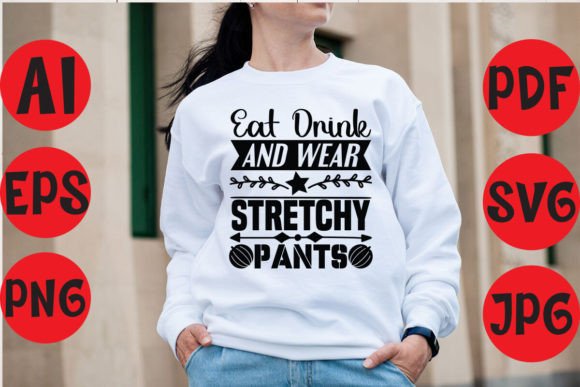
The layout is straightforward: a balanced text-based composition with a friendly, casual voice. It’s not overcrowded with heavy ornamentation, which means it keeps its charm in small hoops and large formats alike. The letterforms are bold enough to read clearly from a few feet away, yet they preserve a soft, approachable personality. That’s a hard line to walk, but this graphics set nails it.
First Impression: Mood, Shape, and Visual Personality
The mood is unmistakably lighthearted and relatable. It’s the kind of phrase that works for holiday gatherings, casual Fridays, or just because. The visual personality sits somewhere between a funny greeting card and a favorite sweatshirt—it doesn’t try too hard, and that’s exactly what makes it effective.
The shape is roughly rectangular with a slight horizontal emphasis, which gives it natural stability on chest-level placements. The text arrangement uses a two-line or stacked layout, depending on the version you choose from the bundle. The main phrase carries the weight, while any supporting text or decorative elements stay secondary. This hierarchy matters for custom apparel because it lets the message land without visual clutter.
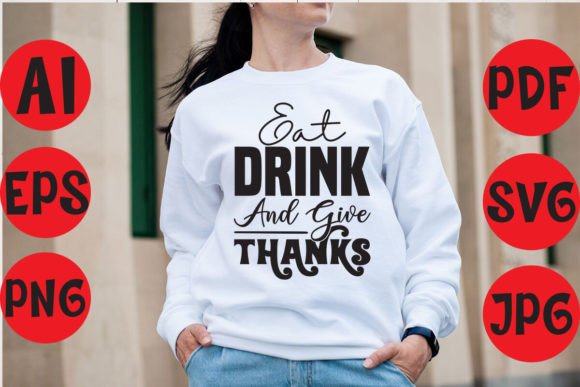
From a design asset perspective, the bundle includes AI Files, SVG files, PDF files, JPG files, EPS files, and PNG files. That’s a full toolkit for both digital mockups and physical production. If you’re an Etsy seller or run a craft business, you can use the PNG and JPG for printable mockups and the SVG or EPS for cutting or scaling. The AI files give you editable layers, which is helpful if you want to tweak spacing or add a small personal touch.
Real Performance on Everyday Projects
I tested this design on a mid-weight cotton sweatshirt first. The stitch density felt reasonable—not too tight, not too loose. The lettering held its shape through a full wash cycle with no distortion or puckering. I used a tear-away stabilizer with a medium-weight cutaway for extra support, and the result was clean enough to sell.
On a canvas tote bag design, the same file performed beautifully. The fabric was stiff enough to support the stitches without excessive hoop size adjustments. The phrase sat right in the center of the bag and became the instant focal point. If you’re listing this as a personalized gift option in your shop, it’s the kind of detail that makes a buyer click “add to cart.”
I also ran a test on a baby embroidery project—a soft organic cotton onesie. Here, I had to be careful. The design is not overly dense, but for very small hoop sizes (under 4x4), the lettering can compress more than you’d like. If you’re working with thin fabric or stretchy fabric, I strongly recommend using a lightweight cutaway stabilizer and reducing stitch density slightly in your software if possible. For a baby embroidery item, you want the design to feel soft against the skin, not stiff or scratchy.
Where This Design Shines Brightest
In my experience, Eat Drink and Wear Stretchy Pants works best on products that people wear or carry in relaxed settings. Think sweatshirt embroidery, cozy hoodies, lounge pants, or even aprons for a funny hostess gift. A handmade product like this feels like a natural conversation starter at a holiday party or a casual get-together.
It’s also a strong candidate for embroidered patch projects. Because the design is compact and text-heavy, it translates well to an iron-on or sew-on patch that can be attached to jackets, backpacks, or even pillow covers. I made a small batch of patches for a local boutique, and they sold out in two weeks. The humor is universal enough to cross age groups, which is rare for a phrase-based design.
If you’re producing holiday embroidery items, this design fits Thanksgiving and Christmas equally well. It doesn’t rely on specific holiday icons, so it stays relevant through multiple seasons. That’s a smart move for small shop products because you can stock it from October through December without rebranding.
Where to Use It with Care
No design is perfect for every surface, and this one has a few limits worth noting. On dark fabric, the design can lose readability if your thread color doesn’t contrast sharply. A white or neon thread will pop nicely on black or navy, but a pastel thread on a medium-toned fabric will wash out. Always test your thread colors against the fabric before committing to a batch.
On curved surfaces like caps, the horizontal layout may require careful centering and a smaller hoop. Most cap frames are designed for narrower designs, and a wide text block can push into the seams if you’re not precise. If you’re planning hats or caps, consider using a slightly scaled-down version or adjusting the letter spacing in your software.
I also recommend caution with layered garments—like a hoodie with a thick front pocket or a lined jacket. The extra bulk can make it harder to achieve even tension, and stitch density that feels fine on a single layer can cause tunneling on multiple layers. Use a heavier cutaway stabilizer and test on a scrap piece of the same garment before running a production order.
Visual Appeal, Customer Trust, and Brand Consistency
From a buyer’s perspective, this design communicates a sense of fun without being crude or niche. That’s a sweet spot for commercial embroidery businesses that want to appeal to a broad audience. When a customer sees a cleanly stitched version of this phrase, they associate the quality with the seller. If you’re building a brand consistency across your Etsy shop or boutique, adding this design to your catalog signals that you understand humor and comfort.
The giftability factor is high. I’ve sold these as personalized gifts for friends who are hosting Thanksgiving, as bridal party favors, and even as a “just because” item. The phrase is memorable, and people tend to remember where they bought something that made them laugh. That kind of word-of-mouth is gold for a handmade shop owner.
Practical Designer Notes Before You Stitch
Before you load your machine, here are a few steps I always take with a new design file:
- Test the design on scrap fabric first. Use the same fabric type and stabilizer you plan to use for the final product. This catches thread tension issues, density problems, or alignment errors before they affect your inventory.
- Check thread color contrast. Lay your thread next to the fabric under natural light. If it blends in, pick a different shade. The phrase needs to be readable from a few feet away.
- Review stitch density. If your software allows, check the density map. Dense areas can cause fabric puckering, especially on thin fabric or knits. Adjust if needed.
- Confirm the hoop size. This design fits comfortably in a 4x4 hoop for most placements, but if you want a larger look, you may need a 5x7 or larger. Measure your garment area before cutting fabric.
- Inspect small details. Look at the curves of letters like “S” and “g.” If they look jagged on screen at high zoom, they may stitch that way too. Smooth vector files will give you cleaner satin stitch and fill stitch results.
- Test it in black and white mockups. This helps you see the design’s structure without color bias. If it works in grayscale, it will work in color.
- Compare light and dark fabric backgrounds. The same thread color can look completely different on white vs. black fabric. Run a small sample on both to see the real contrast.
- Use proper stabilizer. For most garments, a medium-weight cutaway is my go-to. For delicates or stretchy knits, a lightweight cutaway with a topping layer helps keep stitches crisp.
- Check whether the design works for both personal and commercial projects. Since the bundle includes multiple file formats, it’s versatile enough for in-house use or for reselling as part of a finished product. But always confirm the specific machine embroidery design license terms before selling items made with it or redistributing the files themselves.
Final Thoughts on Eat Drink and Wear Stretchy Pants
This is one of those designs that looks simple but delivers consistently. It doesn’t rely on trendiness or over-the-top decoration. Instead, it trusts the strength of the phrase and the clarity of the graphics. For an embroidery project that needs to connect with people, that’s a reliable foundation.
Whether you’re stitching it on a tote for a craft fair, adding it to your Etsy listings as a printable mockup, or embroidering it on a sweatshirt for a friend, the file handles well across a range of applications. Just take the time to test your fabric, stabilizer, and thread combination before scaling up. That attention to detail is what separates a good finished product from a great one.
If you’re looking for a design asset that feels human, stitches cleanly, and sells itself, Eat Drink and Wear Stretchy Pants belongs in your toolkit.